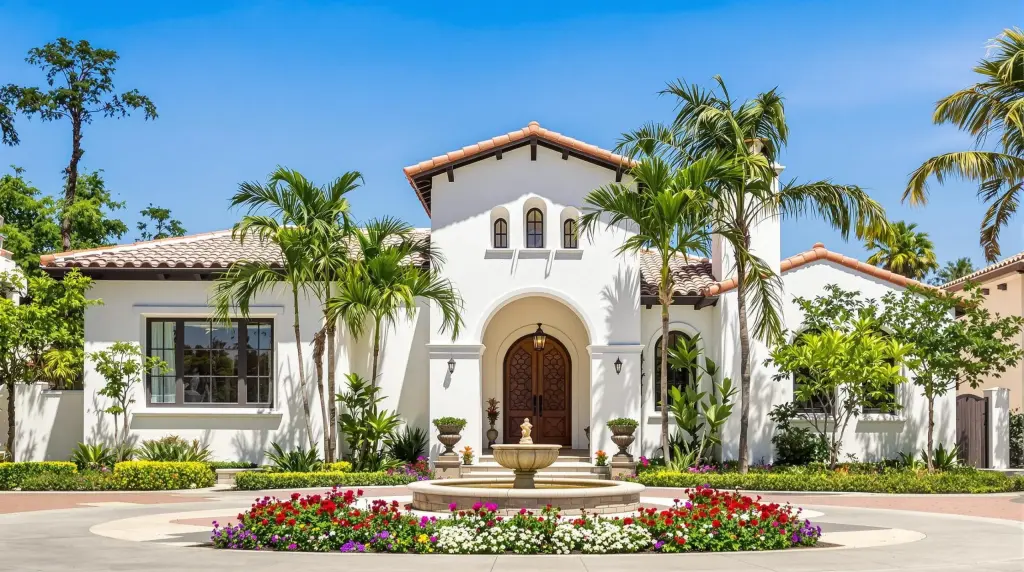

Park Santiago is a north Santa Ana neighborhood of older single-family homes on a grid of quiet streets between North Main Street and Lincoln Avenue, with Santiago Creek and Santiago Park along its northern edge. It suits buyers who want a 1920s-to-1950s house with a yard, a real neighborhood association, and a short drive to downtown Santa Ana, Orange and the I-5. This guide covers where the neighborhood starts and stops, what the houses are like, what to check before you buy an older home here, and how to tour it well.
Jump To:
Where Park Santiago Is
City of Santa Ana historic-resource survey forms describe Park Santiago as bounded by Santiago Creek and Santiago Park on the north, East 17th Street on the south, Lincoln Avenue on the east and North Main Street on the west, with the I-5 freeway cutting across the southwest corner. Those lines are older than the freeway. They follow the rail routes built around 1900: the Pacific Electric interurban ran up Main Street, the Santa Fe tracks followed Lincoln, and a Southern Pacific right-of-way ran roughly where the freeway is now.
Inside those lines the streets are mostly residential. Commercial activity stays on the edges, mainly along Main Street and 17th Street. Discovery Cube Orange County and MainPlace mall sit on North Main near the neighborhood's northwest corner. Downtown Santa Ana is a short drive south on Main.
A Short History
According to the Park Santiago Neighborhood Association, the area was once part of the Yorba family's Rancho Santiago de Santa Ana. In the late 1800s it was mostly citrus, walnut and avocado orchards with scattered ranch houses and packing sheds, and locals called it "the Northside."
Subdivision picked up after World War I. Edgewood Park, a 1922 tract bounded by Edgewood Road, Santiago Street, Santa Clara Avenue and Valencia Street, was marketed as an exclusive, restricted subdivision. City survey records note that most streets west of Santiago Street were laid out by 1923, while land to the east was not subdivided until the mid-1920s or later. Building slowed in the Depression and nearly stopped during the war. Afterward, the eastern blocks filled in with simpler ranch houses. The association notes that post-war homes on streets such as Spurgeon, Avalon, Buffalo and Catalina were first built as off-base housing for officers stationed at MCAS El Toro and NAS Tustin.
That staggered growth is why one block can mix a Craftsman, a Spanish Colonial Revival and a ranch house.
Homes and Architecture
Park Santiago is almost entirely detached single-family homes, most of them one story. The association's architecture pages and city survey forms point to a few recurring types:
- Craftsman bungalows (about 1902 to the early 1920s): low-pitched gabled roofs, exposed rafter tails and deep front porches. Several of the oldest are on Santiago Street.
- Colonial Revival and Dutch Colonial Revival: hipped or gambrel roofs, dormers and columned porches. The Goodwin House, from about 1907, has a cross-gabled gambrel roof.
- Spanish Colonial Revival and Tudor Revival (1920s and 1930s): stucco and red tile, or steep gables with half-timbering.
- Post-war ranch houses (late 1940s and 1950s): single-story, simpler detailing, often on the eastern blocks.
Many houses have been expanded or updated over the decades. Some updates respect the original design; others swapped wood windows for vinyl or closed in porches. Lot sizes and floor plans vary a lot from street to street, so compare each home with the sales on its own block, not with a neighborhood average.
Santiago Park and the Creek
Santiago Park is a 34.43-acre city park that runs along Santiago Creek from Main Street toward the 22 freeway, near Memory Lane and Main. It has a lawn bowling green and clubhouse, an archery range, tennis courts, a ball diamond, a multipurpose field, a playground, picnic areas, a historic log cabin, and bike and walking trails. The city closes it from dusk to dawn.
The park has had several rounds of upgrades. The city's announcement of the latest phase lists picnic areas, creek overlooks, lighting, an entry monument at Main Street, and a bike path that connects to the Santiago Creek Bike Trail. That phase was funded mainly by a $2.8 million California State Coastal Conservancy grant. The renovated Gashouse building can now be rented for private events, and a later phase is planned for the section east of the Lawn Bowling Center.
Schools
Park Santiago is in the Santa Ana Unified School District. Neighborhood school assignments can differ from one street to the next, and the district also runs fundamental schools with their own enrollment rules, so confirm the assigned schools for a specific address with the district before you rely on a listing's school info. Santa Ana is also home to the Orange County School of the Arts, a charter school in downtown Santa Ana, and Mater Dei High School, a private Catholic high school. Both have their own admissions processes.
Getting Around
- Freeways: The I-5 runs along the southwest edge, and the 22 is near the east end of Santiago Park. The 55 is a few minutes east.
- Surface streets: Main Street runs south to downtown Santa Ana and north toward the city of Orange. 17th Street is the main east-west route.
- Bike: The upgraded park path connects to the Santiago Creek Bike Trail.
Drive times to Irvine or the coast depend heavily on the hour. If you will commute at rush hour, drive the route at that hour before you write an offer.
What to Check Before You Buy
Historic Status and the Mills Act
Park Santiago is not a National Register historic district like Floral Park or French Park, so most houses here are not under historic review. Individual homes can still be listed on the Santa Ana Register of Historical Properties, and that changes the rules for that one house.
The city says any alteration to a property on the Santa Ana Register must meet the Secretary of the Interior's Standards for Rehabilitation and needs a Certificate of Appropriateness, and major alterations, relocations or demolitions go through a separate city approval. If you plan to add a second story, replace windows or rework the front of a listed home, confirm the process and timeline with the Planning Division before you remove your contingencies.
The upside of a listed home is the Mills Act. Santa Ana lets owners of qualified historic properties sign a Historic Property Preservation Agreement. The owner agrees to preserve and maintain the house to set standards, and in exchange gets a property tax reduction. A Mills Act contract normally stays with the property when it sells, so ask the seller for the recorded agreement, any required maintenance plan, and the current tax bill. For more on the city's designated districts, see our guide to Santa Ana's historic districts.
Older-Home Inspections
Most of these houses are 70 to more than 100 years old. Beyond the general inspection, budget for:
- A sewer lateral camera scope. Older clay or cast-iron lines are common.
- An electrical review for original wiring, undersized panels and ungrounded circuits.
- A foundation and crawl-space check, plus a termite report.
- A permit history check with the city. Older additions, garage conversions and enclosed porches are not always permitted.
- A flood zone check for homes near Santiago Creek, using FEMA's flood maps and your insurance agent.
Pricing and Competition
Redfin's September 2026 snapshot above shows a median sale price of about $1.18 million and 26 median days on market, but from only five sales. With a sample that small, one large remodeled house or one fixer can swing the median. Price each home against recent sales of similar size, condition and era on nearby blocks. If the home needs work, talk to a lender early about renovation financing and how an appraiser is likely to treat an older, partly updated house.
Who Park Santiago Suits
- Buyers who want character and a yard close to central Orange County, without paying coastal prices.
- Households who will use the park and like a neighborhood with regular events.
- Owners willing to maintain or restore an older home, and to work within historic rules if the house is listed.
It is less of a fit if you want new construction, an HOA that handles exterior upkeep, or a lock-and-leave condo.
How to Tour the Neighborhood
- Walk the creek path in Santiago Park in the morning, then loop south through the older blocks west of Santiago Street.
- Drive the eastern blocks near Lincoln to compare the post-war ranch streets.
- Check traffic and noise near Main Street, 17th Street and the I-5, especially if you are looking at homes on those edges.
- Look at the association's calendar and visit during a community event to meet neighbors.
- Return on a weekday evening to see parking and how the street feels after work.
Key Takeaways
- Park Santiago runs roughly from North Main Street to Lincoln Avenue and from 17th Street north to Santiago Creek.
- The houses range from Craftsman bungalows to post-war ranches. Compare each one block by block.
- Santiago Park is a recently upgraded 34-acre creekside park with trails and lawn bowling.
- The neighborhood is not a National Register district, but individual homes may be on the Santa Ana Register, which brings both review rules and possible Mills Act tax savings.
- The local sample of sales is small. Price from close comparable homes, not the neighborhood median.
Thinking about a home in Park Santiago or elsewhere in Santa Ana? Ali Shariat is a Realtor and licensed loan officer (DRE #02115442), so he can help with both the house and the financing on an older home. Contact Ali or call (949) 818-1000.
FAQs
Where is Park Santiago in Santa Ana?
It is in north Santa Ana. City survey records describe it as bounded by Santiago Creek and Santiago Park on the north, East 17th Street on the south, Lincoln Avenue on the east and North Main Street on the west, with the I-5 crossing its southwest corner.
Is Park Santiago a historic district?
It is not a National Register historic district like Floral Park or French Park. Individual homes can still be listed on the Santa Ana Register of Historical Properties. Listed homes need a Certificate of Appropriateness for alterations and may qualify for Mills Act property tax savings.
What types of homes are in Park Santiago?
Mostly one-story single-family homes. Craftsman, Colonial Revival, Spanish Colonial Revival and Tudor Revival houses from the early 1900s through the 1930s mix with post-war ranch houses, especially on the eastern blocks.
What school district serves Park Santiago?
Santa Ana Unified School District. Assignments vary by address, so confirm the schools for a specific home with the district.
What is there to do in Santiago Park?
The 34-acre park has creekside trails, a bike path that links to the Santiago Creek Bike Trail, lawn bowling, an archery range, tennis courts, a ball diamond, a playground and picnic areas. It is closed from dusk to dawn.