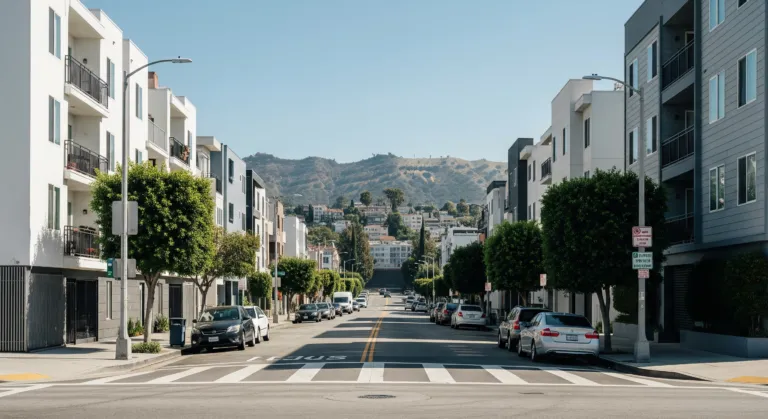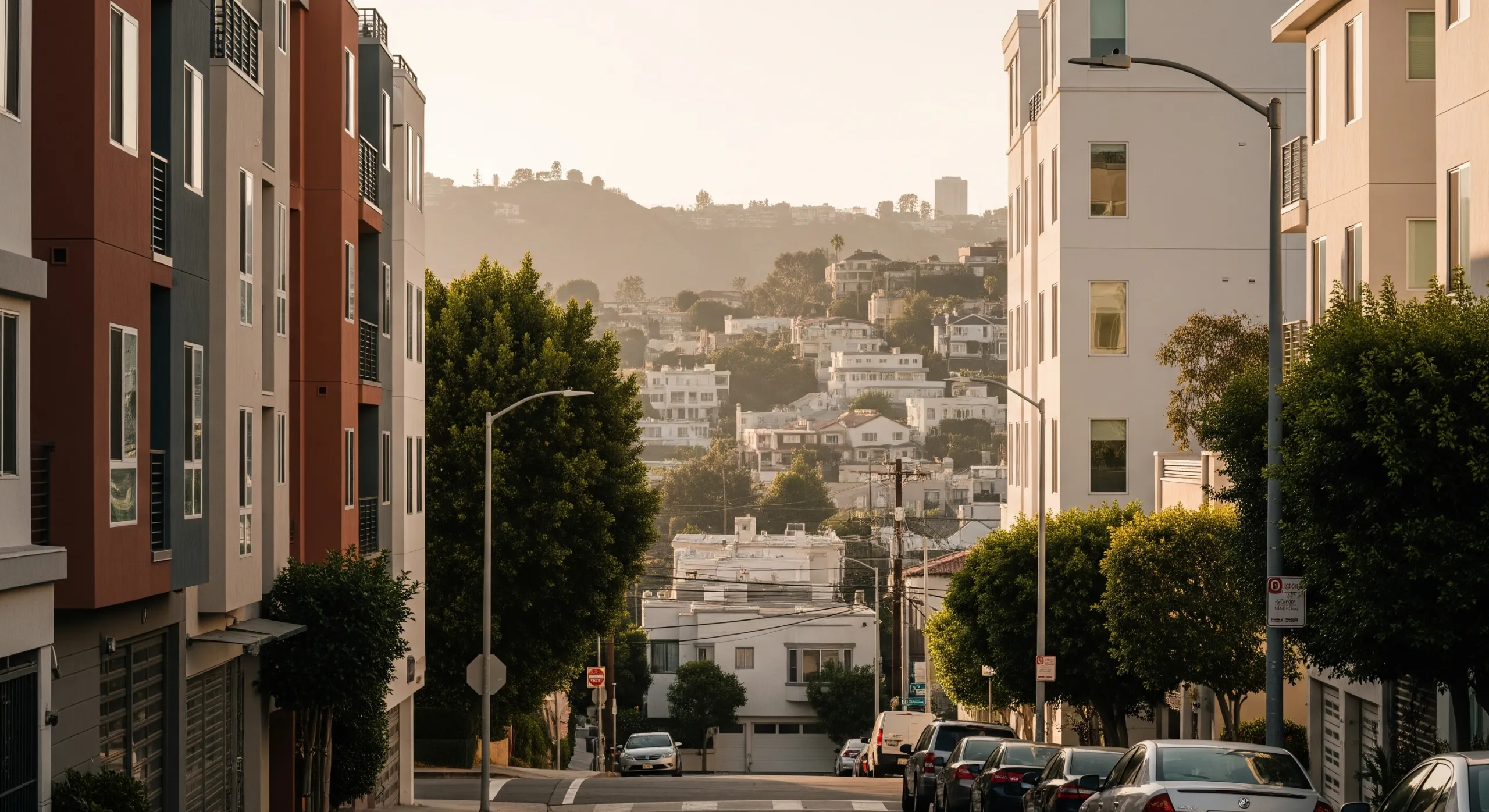

Most people picture the Walk of Fame when they think of Hollywood, but the people who live there talk about something else: it's one of the few parts of Los Angeles where you can walk to dinner, take the subway downtown and hike a canyon trail without moving your car. That convenience comes with real trade-offs in noise, crowds and crime around the tourist core, and prices vary enormously between the flats and the Hills.
Below: what living in Hollywood is actually like in 2026, with current home values and rents, transit, the sub-neighborhoods worth knowing, safety data and the rules investors need to understand, from Ali Shariat, a Realtor and licensed loan officer.
Jump To:
Hollywood at a Glance
- Walkability: a Walk Score of about 95, against a Los Angeles average of 69.
- Transit: three Metro B Line stations, at Hollywood/Western, Hollywood/Vine and Hollywood/Highland.
- Home values: about $870,000 for a typical home in Hollywood and about $1.9 million in the Hollywood Hills (Zillow, September 2026).
- Rents: a typical rent of about $2,600 to $3,100 a month, depending on ZIP code.
- Crime: reported serious crime in LAPD's Hollywood Area is down 2.7% so far in 2026, but the tourist core still sees a lot of theft.
1. Walkability and the Metro B Line
Hollywood scores about 95 on Walk Score, a "Walker's Paradise," and the blocks around Hollywood Boulevard and Ivar score 98. Groceries, gyms, restaurants and nightlife are within a few blocks for most residents of the flats.
The Metro B Line (formerly the Red Line) stops at Hollywood/Western, Hollywood/Vine and Hollywood/Highland. It runs to Union Station downtown in one direction and to Universal City and North Hollywood in the other, with the full line taking about half an hour. For people who work downtown, at the studios or in the Valley, that can replace a daily drive. Living without a car is realistic here in a way it isn't in most of Los Angeles.
2. Home Prices and Rents in 2026
Zillow's Home Value Index, which estimates the value of a typical home rather than the median sale price, shows how much the Hills and the flats differ (Zillow Research, September 2026):
| Area | Typical home value | Change from a year ago | Typical condo | Typical rent |
|---|---|---|---|---|
| Hollywood | $869,664 | -1.9% | n/a | n/a |
| Hollywood Hills | $1,910,974 | +1.0% | n/a | n/a |
| ZIP 90028 | $859,679 | -4.2% | $696,000 | $2,633 |
| ZIP 90038 | $993,836 | -3.5% | $704,000 | $2,664 |
| ZIP 90068 | $1,620,440 | +0.6% | $628,000 | $3,136 |
Two things stand out. Values in the flats have softened over the past year while the Hills held steady, and condos are the realistic entry point at roughly $630,000 to $700,000. Rents rose only 1% to 2% year over year, so buyers counting on rent growth to cover a high payment should run conservative numbers. See our Los Angeles guide for the wider market.
3. Neighborhoods Within Hollywood
- Hollywood Hills: hillside homes with views and privacy, at roughly double the price of the flats. Expect narrow streets, fire-zone insurance questions and more driving.
- Beachwood Canyon: a quiet canyon under the Hollywood Sign with 1920s homes, a small village center and limited through traffic.
- Franklin Village: a compact, walkable strip of cafes and older apartment buildings just north of Hollywood Boulevard.
- Spaulding Square: about 160 craftsman and Spanish-style homes built from 1916 to 1921, protected since 1993 as a Historic Preservation Overlay Zone (HPOZ).
- Thai Town and Little Armenia: on the east side, with some of the best and most affordable food in the city.
4. More Green Space Than You'd Expect
- Runyon Canyon: the city's most popular short hike, with views across the basin.
- Lake Hollywood Park: a grassy park below the Hollywood Sign, next to the Hollywood Reservoir trail.
- Barnsdall Art Park: a hilltop park with Frank Lloyd Wright's Hollyhock House, art classes and sunset views.
- Griffith Park: more than 4,000 acres of trails, the observatory and the Greek Theatre, a short drive east.
5. Food, Culture and Everyday Life
Beyond the Walk of Fame, Hollywood has weekly farmers markets, independent theaters, music venues and a deep bench of restaurants from Thai Town to Melrose. The population mixes long-time residents, immigrant communities, students and people working in entertainment and tech. The flip side is constant activity: tourists, events and nightlife make the core loud, especially on weekends.
Is Hollywood Safe?
It depends heavily on the block. LAPD's COMPSTAT report for the Hollywood Area, covering the year through October 17, 2026, shows 4,479 serious (Part I) crimes, down 2.7% from 4,604 at the same point in 2025 (LAPD Hollywood profile). Burglary was down 13.8% and vehicle theft down 17.9%, but robbery rose 2.8% and theft 7.6%, and there were 11 homicides compared with 8 a year earlier.
Citywide, Los Angeles recorded 230 homicides in 2025, the fewest since 1966. In Hollywood, most crime concentrates around the tourist and nightlife corridors. Residential streets in Beachwood Canyon, the Hills and parts of the flats feel very different from Hollywood and Highland at 1 a.m. Visit at night, check the building's security, and look at LAPD's crime map for the exact address.
What Investors Should Know
- Rent stabilization: most apartment buildings in the City of Los Angeles built before October 1978 fall under the city's Rent Stabilization Ordinance (RSO), which limits annual increases and requires just cause for evictions. The city changed the RSO increase formula in 2026, so check the Los Angeles Housing Department for the current allowable increase before you underwrite rents.
- Newer buildings: units not covered by the RSO may still fall under California's statewide rent cap (AB 1482) unless they're exempt. Our rental ROI guide covers the state rules.
- Measure ULA: the city's transfer tax on high-value sales adds 4% on sales above about $5.4 million and 5.5% above about $10.9 million, with thresholds adjusted each July. It matters mostly for Hills estates and larger apartment buildings.
- Historic districts: HPOZ homes can't be altered freely, but qualifying historic properties may be eligible for Mills Act property tax savings.
Key Takeaways
- Hollywood is among the most walkable, transit-served neighborhoods in Los Angeles, with three B Line stations.
- Typical values run about $870,000 in Hollywood and $1.9 million in the Hills; condos start around $630,000 to $700,000.
- Prices in the flats dipped over the past year while rents rose only 1% to 2%.
- Serious crime is down slightly in 2026, but safety varies sharply by block, especially near the tourist core.
- Investors need to understand the RSO, AB 1482 and Measure ULA before buying.
FAQs
Is Hollywood a good place to live?
For people who want a walkable, urban life with transit, food and culture nearby, yes. It's less suited to anyone who wants quiet streets, big yards or top-rated neighborhood schools, and the core is busy with tourists and nightlife. Beachwood Canyon, the Hills and Spaulding Square offer a quieter version.
How much does it cost to buy or rent in Hollywood?
Zillow put the typical home value at about $870,000 in Hollywood and $1.9 million in the Hollywood Hills in September 2026. Typical condos in the main ZIP codes run about $630,000 to $700,000, and typical rents about $2,600 to $3,100 a month.
Is Hollywood safe to live in?
It varies by street. LAPD's Hollywood Area reported 2.7% fewer serious crimes in 2026 through mid-October than a year earlier, with burglary and car theft down but robbery and theft up. Crime concentrates around the tourist and nightlife corridors, so check the specific block and building.
Can you live in Hollywood without a car?
More easily than almost anywhere else in Los Angeles. With a Walk Score around 95 and three Metro B Line stations, many residents walk for errands and take the subway downtown, to Universal City or to North Hollywood.
Are Hollywood apartments rent-controlled?
Many are. Most apartment buildings in the City of Los Angeles built before October 1978 are covered by the Rent Stabilization Ordinance. Newer units may fall under California's AB 1482 instead. Confirm a building's status with the Los Angeles Housing Department before buying or signing a lease.
Thinking about buying a home or a rental in Hollywood? Ali can pull recent sales, check a building's rent-control status and run the financing as your loan officer. Contact Ali or call (949) 818-1000.